How to Eat During an Ultra Marathon: Smart Fueling for Climbs, Descents and Aid Stations
Ultra marathon success isn’t just about fitness, training or mental toughness. Your nutrition strategy can make the difference between finishing strong and hitting the wall halfway through the race.
Many runners focus on what to eat during an ultra, but experienced ultrarunners know that when you eat is often just as important as what you eat.
In mountain ultras, where long climbs and technical descents constantly change the demands on your body, timing your fueling correctly can help maintain energy levels, avoid stomach issues, and keep you moving efficiently for hours.
Why Timing Matters in Ultra Marathon Nutrition
One of the biggest mistakes runners make is assuming that food becomes energy immediately.
In reality, carbohydrates typically take around 20 to 30 minutes to be absorbed and reach your bloodstream. This means the gel, sports drink or energy chew you consume now is fueling the effort you’ll face later.
Instead of fueling for the terrain you’re currently running on, you should be fueling for the terrain that’s coming next.
The most successful ultrarunners are constantly thinking ahead.
How to Fuel Before a Climb - The Most Important Fueling Window
Climbs are usually the most energy-demanding sections of an ultra marathon. As intensity increases, your body relies heavily on carbohydrates for energy.
To prepare for a significant ascent:
- Consume quick carbohydrates 10 to 20 minutes before the climb begins.
- Choose easily digestible options such as:
- Energy gels
- Energy chews
- Sports drinks
- Soft energy bars
These products digest rapidly and help ensure carbohydrates are available when the climb becomes steep and demanding.
Waiting until you’re already struggling uphill is often too late.
A simple rule is: Fuel before your body asks for it.
What to Eat During a Long Climb
As effort increases, blood flow is redirected toward working muscles and away from the digestive system.
This is why many runners experience:
- Nausea
- Bloating
- Stomach discomfort
- Difficulty eating
During a climb, the goal is maintenance rather than heavy fueling.
Best Practices for Climbing
- Take small, regular sips of fluid.
- Avoid consuming large amounts of food at once.
- Use easily digestible carbohydrates.
- On long hiking sections, small bites of food can still work well.
Remember that forcing food during a steep climb often causes more problems than it solves.
Keep intake simple, controlled and consistent.
The Best Time to Refuel: After the Climb
Many runners overlook one of the easiest opportunities to refuel properly.
Once the climb is completed:
- Heart rate typically decreases.
- Digestion improves.
- The body becomes more receptive to food.
This is the ideal moment to replace the carbohydrates burned during the ascent.
Great Foods to Eat After a Climb
At aid stations or while running smoother terrain, consider:
- Potatoes
- Bananas
- Rice-based foods
- Wraps
- Energy bars
- Sports drinks
This is also an excellent opportunity to begin rehydrating before dehydration becomes a problem.
Think of post-climb fueling as preparation for the next challenge rather than recovery from the previous one.
Should You Eat on Downhill Sections?
The answer depends on the type of descent.
Smooth Downhill Trails
Smooth descents are often ideal for fueling because:
- Energy expenditure decreases.
- Digestion improves.
- You can eat without significantly affecting pace.
Many experienced ultrarunners use these sections to maintain a steady flow of calories.
Technical Descents
Technical downhill sections require concentration and balance.
When navigating rocks, roots or steep terrain:
- Prioritize footing.
- Focus on safety.
- Avoid complicated eating strategies.
Missing a step can cost far more time than delaying a gel by a few minutes.
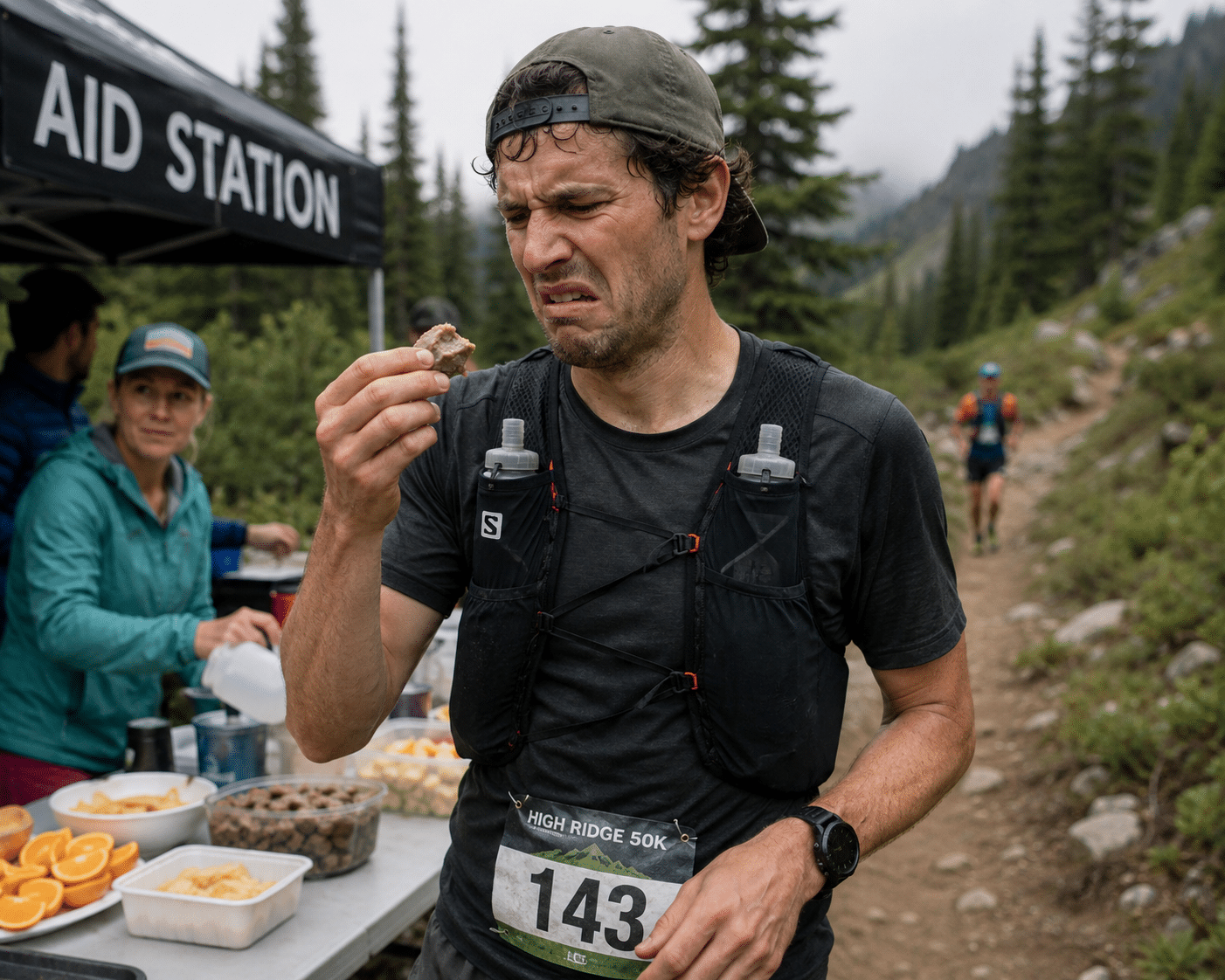
How to Use Aid Stations Efficiently
Aid stations are valuable opportunities to reset your fueling strategy.
The most effective runners don’t simply eat whatever looks appealing. Instead, they arrive with a plan.
At aid stations:
- Refill fluids.
- Restock carbohydrates.
- Eat foods that have worked during training.
- Avoid experimenting with unfamiliar options.
- Think about the next section of the course.
Before leaving, ask yourself: “Am I fueled for the next climb?”
Not: “Am I hungry right now?”
The Biggest Ultra Marathon Nutrition Mistake
The most common fueling error is waiting until symptoms appear.
By the time you feel:
- Hungry
- Weak
- Empty
- Dizzy
- Low on energy
you are already behind.
Energy deficits are much easier to prevent than to fix.
Many runners discover that a fueling mistake made early in the race doesn’t affect them immediately. Instead, the consequences appear hours later when fatigue suddenly becomes overwhelming.
Ultra Running Nutrition Is Continuous Energy Management
One of the biggest mindset shifts in ultra running is understanding that fueling isn’t a response to hunger.
It’s a proactive strategy.
Successful ultrarunners constantly work to stay ahead of depletion by:
- Eating regularly.
- Drinking consistently.
- Fueling before major efforts.
- Taking advantage of easier terrain to refuel.
- Monitoring energy levels throughout the race.
The goal is simple: Never let the tank get empty.
Key Takeaways
- Fuel for the terrain ahead, not the terrain you’re currently on.
- Eat quick carbohydrates 10–20 minutes before major climbs.
- Keep fueling simple during steep uphill efforts.
- Use post-climb sections to properly refuel and rehydrate.
- Smooth descents are often excellent opportunities to eat.
- Don’t wait until you’re hungry to fuel.
- Consistent nutrition is one of the most important skills in ultra marathon racing.
Mastering your fueling strategy can transform your ultra marathon experience, helping you maintain energy, avoid stomach issues and perform consistently from the start line to the finish line.