

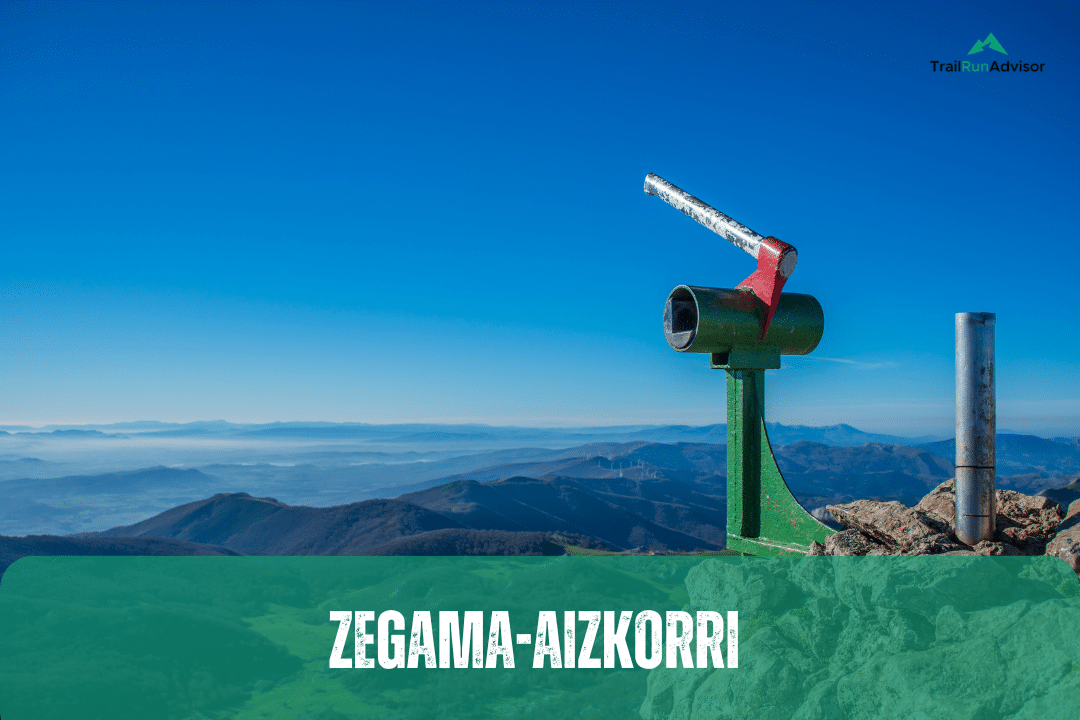
Zegama-Aizkorri 2026 – how to qualify and train for such an explosive race
Zegama-Aizkorri is not just another trail race on the calendar. It is one of the most iconic, demanding, and emotionally charged mountain races in the world. Short on distance but brutal in execution, Zegama rewards very specific qualities: explosive strength, technical confidence, and the ability to suffer at high intensity for several hours without losing efficiency.
If you are targeting Zegama-Aizkorri 2026, you need to understand two things clearly from the start:
qualifying is competitive and increasingly selective
finishing strong requires a very different preparation compared to longer Alpine ultras
This guide breaks down the qualification process, the ideal runner profile, and the training approach you need if you want to arrive at the start line ready to race—not just survive.
Understanding Zegama-Aizkorri: a race defined by intensity
Zegama-Aizkorri covers just over 42 km with roughly 2,700 m of positive elevation gain. On paper, it looks manageable for experienced trail runners. In reality, it is one of the most physically and mentally punishing marathons in mountain running.
The reasons are clear:
Extremely steep climbs, often walked but at maximal effort
Technical descents where hesitation costs minutes
Constant changes of rhythm
Mud, rain, wind, and cold are common
Crowds that push the pace from the very first climb
There is almost no “cruise mode” in Zegama. You are either climbing hard, descending aggressively, or fighting to hold position on runnable sections. That is why training and race selection beforehand matter so much.
How to qualify for Zegama-Aizkorri 2026
The lottery system
Zegama-Aizkorri uses a lottery-based registration system, but it is not random in the pure sense. Priority is given to runners who meet specific criteria, and your chances depend heavily on your race history.
Key points to know:
Registration usually opens in January
You must pre-register during the official window
Only runners with qualifying results are eligible
Even with strong results, selection is not guaranteed
The race deliberately limits access to preserve its character and safety on narrow mountain paths.
Qualifying races and performance requirements
To be eligible for the draw, you typically need:
A strong result in a recognized mountain race, often part of international circuits (Golden Trail World Series, Skyrunner World Series, or selected national championships)
A performance that places you within a competitive percentile of the field, not just a finish
Recent results, usually from the previous one or two seasons
Zegama favors:
Short to medium-distance mountain races
High-intensity profiles with steep terrain
Demonstrated ability to race, not just finish
If your race history is built only on long ultras, your profile may not align well with what the organizers look for.
National and elite quotas
Some runners gain access through:
National federation selections
Elite invitations
Sponsor or circuit-based entries
These spots are extremely limited. For most runners, the realistic path is still the standard qualification route combined with the lottery.
The ideal runner profile for Zegama-Aizkorri
Zegama is not about endurance alone. It is about controlled violence over several hours.
The runners who perform best usually share these traits:
Strong uphill power-to-weight ratio
Excellent hiking efficiency on very steep grades
Confidence descending on wet rock, mud, and grass
Ability to sustain high heart rate zones for long periods
Mental resilience under crowd pressure and noise
If you come from:
Cross-country running
Short mountain races
Ski mountaineering
Road racing combined with vertical training
You are naturally closer to the Zegama profile than someone specialized exclusively in long ultras.
How to train specifically for Zegama-Aizkorri 2026
Prioritize power over volume
Zegama does not reward massive weekly mileage alone. It rewards usable strength.
Your training should emphasize:
Uphill power
Muscular endurance
Neuromuscular efficiency
This means fewer junk kilometers and more sessions with intent.
Key training pillars
1. Steep uphill intervals
Focus on:
Sustained climbs of 10–30 minutes
Power hiking with poles (if you plan to use them)
Heart rate near threshold
This mimics race conditions far better than flat tempo runs.
2. Technical downhill conditioning
Many runners lose Zegama on the descents.
You need:
Repeated downhill efforts
Training on wet, uneven terrain
Eccentric strength work for quads and calves
Controlled aggression downhill is a competitive advantage here.
3. Strength training is non-negotiable
At least two sessions per week during base and build phases:
Heavy lower-body lifts (squats, deadlifts, step-ups)
Plyometrics for stiffness and reactivity
Core and hip stability
Zegama punishes weakness brutally after the halfway point.
4. Race-pace specificity
In the final 8–10 weeks:
Short mountain races or hard training efforts
Sessions that simulate race fatigue
Practice transitions between hiking, running, and descending
You need to feel comfortable being uncomfortable.
Tactical and mental preparation
Zegama is as much psychological as physical.
Key mental aspects:
Accept that discomfort starts early
Do not chase the crowd beyond your limits
Race your own effort, not the noise
Stay calm if conditions deteriorate
Many runners blow their race in the first major climb. Discipline is critical.
Final thoughts on Zegama-Aizkorri 2026
Zegama-Aizkorri is not a race you “try out.” It is a race you prepare for deliberately.
If your goal is to be on that start line in 2026:
Choose your qualifying races carefully
Build a profile that matches the race’s demands
Train for intensity, not just distance
Respect the mountain and the race’s unique rhythm
Do this well, and Zegama will give you one of the most unforgettable racing experiences in trail running. Ignore it, and it will expose every weakness you have.
Target it properly. Train specifically. And when race day comes, be ready to fight from the first climb to the last descent.