
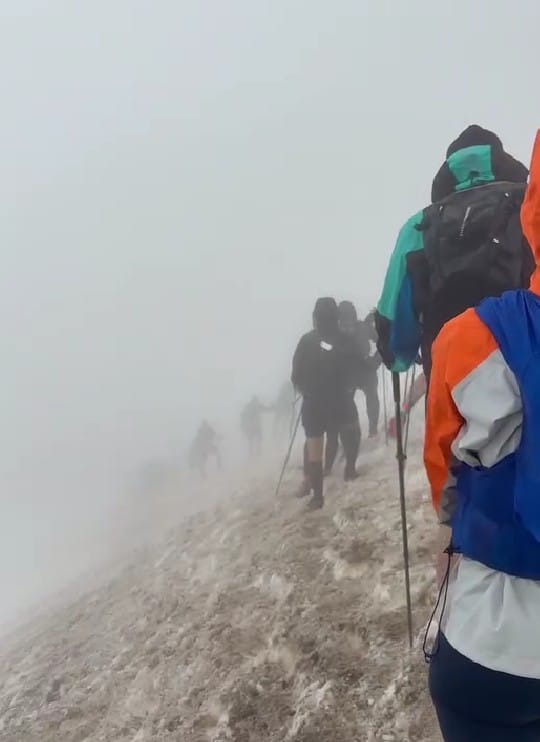
When a Trail Race Felt Like a Survival Challenge: Four Runners Reflect on Transylvania 100
Snow, ice, fog and exposed mountain terrain turned one of Eastern Europe’s toughest trail races into an unforgettable experience. TrailRunAdvisor spoke with four participants to understand what they encountered on the course and what lessons can be learned for the future.
Editor’s Note: The observations in this article are based on testimonials collected from four participants in the 2026 edition of Transylvania 100. Their views reflect their personal experiences and perceptions during the race.
For many trail runners, Transylvania 100 is synonymous with challenge. Set in Romania’s Bucegi Mountains, the race is known for its technical terrain, steep climbs and alpine atmosphere.
This year, however, conversations after the race focused less on performances and finishing times, and more on the conditions runners faced high in the mountains.
TrailRunAdvisor collected testimonials from four participants who competed in the 30 km and 100 km races. While their backgrounds and levels of mountain experience varied, their stories revealed strikingly similar themes: snow, ice, fog, exposed terrain, difficult route-finding, and moments where several felt their safety was genuinely at risk.
From Trail Race to Survival Mode
The race began relatively normally for most participants.
One runner in the 30 km race described feeling comfortable during the opening kilometers, with good sensations and a steady rhythm. Another participant in the 100 km event reported pleasant conditions below 2,000 meters.
But the atmosphere changed dramatically as runners gained altitude.
Around Mount Omu and the surrounding alpine sections, participants encountered strong winds, freezing temperatures, dense fog, snow-covered slopes and extensive ice.
One 100 km runner estimated visibility at less than five meters in certain sections. Another participant summed up their experience with a phrase that appeared repeatedly in different forms throughout the testimonials:
“It stopped feeling like a race.“
For one runner, the event became “survival mode, not race.”
For another, fear gradually replaced enjoyment.
“I don’t think it’s normal to fear for your life several times during a trail race,“ they explained.
The Omu Section: Where Concerns Converged
Although the runners completed different race distances, all four identified the Mount Omu area as the section that generated the greatest concern.
Participants described traversing snow-covered slopes above steep drop-offs, crossing ice-covered sections in strong winds, and attempting to navigate difficult terrain with limited visibility.
One runner recalled slipping on a snow-covered slope and only avoiding a longer fall by planting their poles into the snow while lying face down on the mountainside.
Another participant witnessed a runner slide and disappeared into the fog below before losing sight of him entirely.
A third runner reported helping another participant who nearly fell on a steep snow section. Moments later, the same runner had to assist the same person again after another slip.
Several participants independently used similar language to describe the atmosphere: a single mistake felt as though it could have serious consequences.
For runners accustomed to technical trail races, the challenge was not necessarily the terrain itself, but the combination of technical terrain with snow, ice, wind and poor visibility.
Equipment Recommendations Versus Reality
A recurring topic across all four testimonials was equipment.
Participants acknowledged that the organization communicated difficult conditions before the race and recommended equipment such as crampons and trekking poles.
However, several runners questioned whether recommendations were sufficient given the conditions encountered on race day.
One participant reported receiving an email before the race strongly recommending crampons and poles, followed by another communication suggesting conditions had improved and that such equipment was no longer necessary, although it could provide additional safety.
Several runners noted that they saw relatively few competitors using crampons despite the icy sections.
Even runners who carried the recommended equipment reported difficulties.
One participant explained that they experienced multiple falls despite using poles and eventually broke one while on a slide.
Another runner stated that crampons significantly improved their confidence and stability on icy sections and may have prevented falls.
Across the testimonials, one recommendation appeared repeatedly: if conditions remain similar in future editions, stronger enforcement of mandatory equipment requirements should be considered.
Safety Measures: Present, but Uneven
When asked about safety measures, participants acknowledged that some provisions were in place.
Ropes were present on certain sections, chains were installed in some rocky areas, medical teams were visible in specific locations, and race staff were encountered at checkpoints and selected mountain sections.
However, the effectiveness of those measures was questioned by several runners.
Multiple participants reported that the areas they perceived as most dangerous were often those where they saw little staff presence, no additional guidance, or no protective systems despite exposure to steep terrain.
One runner specifically questioned why some icy traverses above ravines did not have additional protection.
Another noted that route markings in certain exposed areas appeared insufficient, particularly given the fog and poor visibility. Some participants reported relying heavily on their GPX navigation rather than course markings.
Several runners also stated that they did not experience any mandatory gear checks despite pre-race communications discussing equipment requirements.
Communication, Risk and Decision-Making
Some runners assumed that if conditions became unacceptable, organizers would modify or stop the race. Others focused entirely on progressing safely through the mountains and simply accepted the situation as part of the event.
Only after the race did broader discussions begin among participants.
Runners spoke about injuries, near-misses, dangerous sections and whether parts of the course should have been rerouted.
Several participants expressed surprise that certain alpine sections remained part of the route given the weather conditions.
What Could Be Done Differently?
Although opinions varied on specific details, the four runners proposed several common areas for improvement.
These included:
- Alternative routes when weather conditions dramatically increase risk.
- Additional ropes or protection on critical sections.
- Stronger communication about actual mountain conditions.
- Mandatory rather than recommended use of certain equipment.
- Rigorous gear checks before the start.
- Increased route marking density in exposed areas.
Several runners also suggested that lessons from earlier starters could have been used to reassess conditions for subsequent race distances.
A Wider Conversation for Trail Running
Transylvania 100 has earned a reputation as one of Europe’s toughest mountain races, and most participants expect difficult terrain and demanding conditions when they sign up.
Yet the testimonials collected by TrailRunAdvisor suggest that this edition crossed a threshold for some runners, where the challenge no longer felt purely athletic.
Instead, it became a test of judgment, preparation and risk management in an unforgiving mountain environment.
The experiences shared by these four runners do not tell the whole story of Transylvania 100. Thousands of individual moments unfolded across the race weekend.
But their accounts raise important questions that extend beyond a single event.
As trail running continues to grow and races venture into increasingly technical terrain, how should organizers balance adventure and safety? What equipment should become mandatory under extreme conditions? And when does a challenging mountain race become something else entirely?
These are questions that runners, race directors and the broader trail community will likely continue discussing long after the finish line.
Challenge is part of trail running. Preventable accidents should not be. When conditions become extreme, prevention and safety must always come first. The ultimate measure of success for any race is simple: every participant returns home safely.
Have you participated in Transylvania 100? Share your experience and race review on TrailRunAdvisor. We welcome different perspectives and experiences from all participants.