Philippine Mountain Trail Festival Interview
The Philippine Mountain Trail Festival (PMTF) has steadily established itself as one of the most unique and highly rated trail running races in Asia, combining brutal mountain terrain, breathtaking landscapes, and an atmosphere deeply rooted in local community spirit. With more than 20 reviews and an impressive 4.8/5 rating on TrailRunAdvisor, the race has built a strong reputation among both Filipino and international runners seeking an unforgettable challenge.
Held in the remote mountains of Nueva Vizcaya, Philippines, PMTF offers a trail running experience unlike anywhere else: endless ridgelines, remote mountain villages, tropical heat, unpredictable weather, and an authenticity that many runners say is increasingly rare in modern racing. As part of the Asia Trail Master series, the event continues to attract more international participants—including runners from Europe looking to discover one of trail running’s best-kept secrets.
But what truly makes PMTF so special? How do you organize a race across some Philippines’ most demanding terrain while preserving such a strong sense of community and authenticity?
We spoke with Robert Watson, race director of the Philippine Mountain Trail Festival and founder of Intrepid Spirit, to explore the philosophy behind the race, the unique challenges of trail running in the Philippines, and what runners can expect from future editions of one of Asia’s most memorable mountain ultras.

Q1. PMTF has received outstanding reviews from runners worldwide (4.8/5). What do you think makes the experience so special for participants?
Honestly, I think it comes down to something that can’t really be manufactured – authenticity. PMTF grew out of a very simple idea: bring people to the mountains of Kayapa, give them a real challenge, and trust that the place will do the rest. Fourteen years on, the mountains still do exactly that.
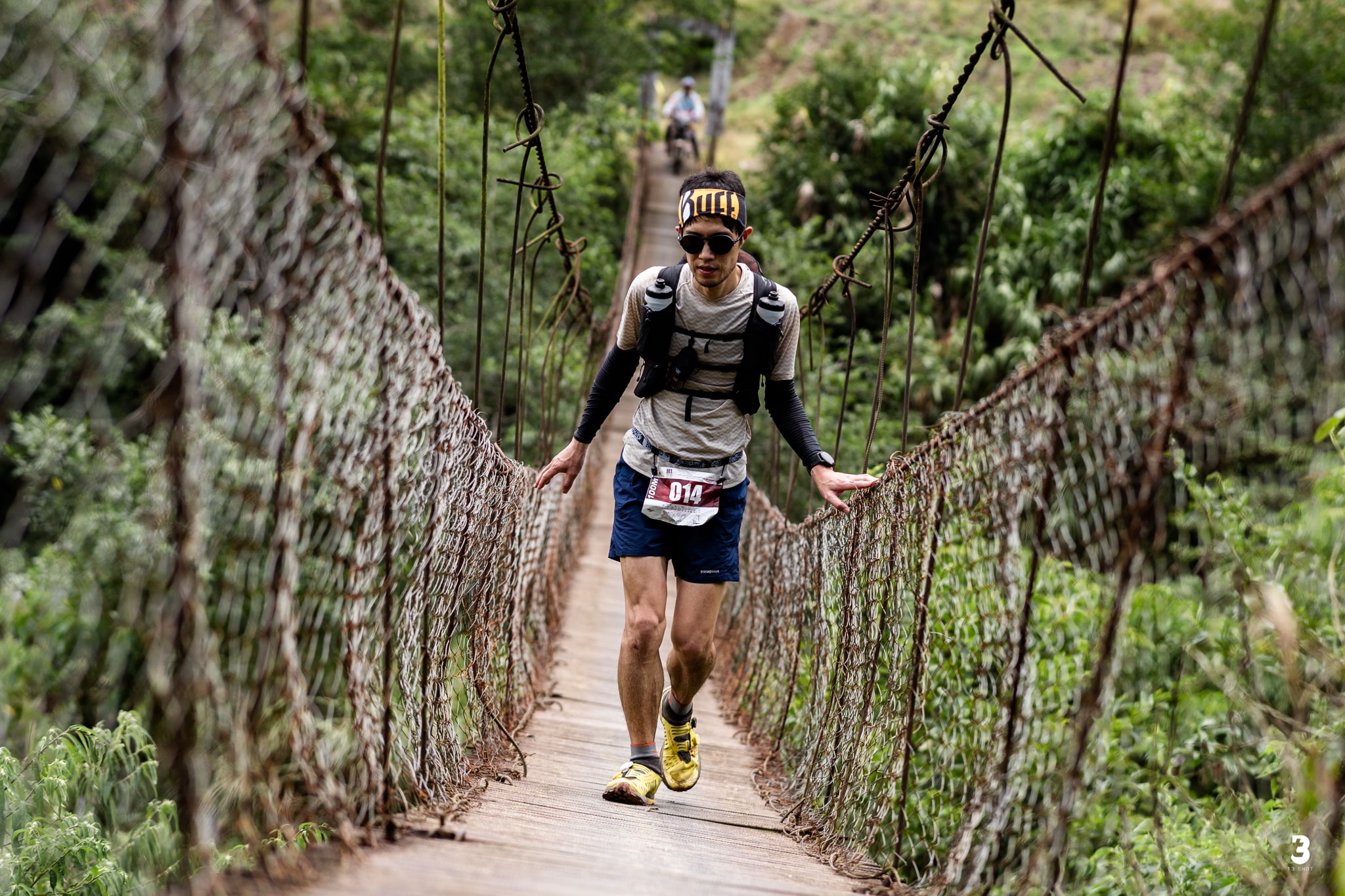
What I hear most from runners—and you can see it in the reviews—is that the combination of the course, the community, and the care we put into every detail creates something they don’t find elsewhere. Our race photographer captured it perfectly after this year’s H1: runners out there fighting something nobody else could see. That emotional, deeply personal dimension is what stays with people long after the finish line.
The 4.8 rating reflects a team that genuinely cares. Our volunteers, marshals, aid station crews – they’re not just doing a job. Many of them are trail runners themselves, or people from the mountain villages and communities along the course who have opened their trails and their hearts to us year after year. That human warmth is something you can feel, and it shows up in the scores.
Q2. Many runners describe PMTF as one of the toughest - but also one of the most beautiful - races they've ever done. How do you balance challenge and enjoyment when designing the course?
It’s less about balance and more about honesty. We never try to make the course easy—that would be a disservice to the mountain and to the runners. But we do design with a deep respect for the full experience.
This year’s Hardcore 100 Miles, better known as H1, covered 171 kilometers with around 9,500 meters of elevation change. No rain at lower elevations—just relentless heat pressing down on runners, hour after hour, in some sections reaching close to 40 degrees Celsius in direct sun. And yet in other parts of the course we had particularly cool conditions, mostly at night at elevation. The environment is as much a challenge as the terrain itself. The new route cared nothing about reputations or experience. And yet, runners who had been through it before described those ridgelines as some of the most striking terrain they had ever run through – brutal and beautiful at the same time. That tension is the goal.
We look at the course through many lenses: the technical challenge, the scenery at different times of day, where the hardest climbs fall relative to cut-offs, where aid stations and water stations need to be placed for both safety and morale. Our runner feedback is invaluable – this year, for example, multiple runners flagged an exposed section with insufficient water access for extreme heat. That goes straight into our planning for next year. We listen, and we adjust.
Q3. For European runners discovering PMTF, the Philippines still feels like an "unknown" trail running destination. What makes your region so unique to explore through running?
Nueva Vizcaya is genuinely unlike anywhere else in trail running, and I think that’s precisely the draw for someone coming from Europe. It’s not a destination that’s been packaged and polished for international consumption. It’s raw. The ridgelines stretch endlessly. The forests go quiet in a way that’s almost disorienting. Before sunrise, when the mountain is still dark and the air is cool, there’s a silence that gets under your skin.
Running through it—especially across multiple days in H1—means passing through mountain villages and communities that are genuinely off the beaten path. Balangabang, Talecabcab, Cabanglasan, Tidang Village, Castillo Village, Binalian, Babadi, Banao, Pangawan, Ansipsip, Kayapa Proper West, Alang Salacsac, Cabalatang Alang, and Amilong Labeng—these are places most tourists never see and most runners will never run through anywhere else in the world. The people are warm, the terrain is varied, and the sense of discovery is very real.
And that extends to where you stay. There are no hotels in Kayapa—accommodation is simple homestays, living with local families. You eat with them, you rest under their roof, and you share the space with runners who have come from all over the Philippines and abroad. It’s familial in the truest sense. That intimacy with the place and its people before you even reach the start line is something no hotel corridor can replicate.
For a European runner used to the Alps or the Pyrenees, the challenge here is different: it’s not just the mountains. It’s the environment. In a single race you might experience temperatures as low as five degrees Celsius—which can feel much colder if you have been soaked by cold, pouring rain on exposed ridgelines—right through to close to 40 degrees under a tropical sun at lower elevations. Rain, thunderstorms, scorching heat—sometimes all within the same race. That is a true test in every sense. But what runners find when they arrive is a fully professional, internationally recognized event on the Asia Trail Master series.
Q4. We see more and more international runners, including Europeans, joining PMTF. Is attracting an international field part of your vision? How do you plan to grow this aspect?
Absolutely. We want PMTF to be known internationally—not because we’re chasing numbers, but because this place deserves to be seen. Our participation in the Asia Trail Master series has been an important step, and we’ve been very deliberate about building to the standards that international runners expect.
In my role as Vice President of Services at the International Trail Running Association—where I oversee IT and digital services for race directors and trail runners globally – gives me a unique vantage point. I see what the best events in the world are doing, and I bring that directly back into PMTF. Equally, what we demonstrate here in Kayapa feeds into the wider global trail running conversation.
This year we generated nearly 2.8 million Facebook views over the race weekend. That reach was unimaginable when Jonel Mendoza started this race in 2012 with a handful of people in the dark. The international interest is already there—our job now is to channel it well.
For 2027 we’re introducing something significant for international participants. Intrepid Spirit, Inc., our organizing company, is a Department of Tourism accredited travel and tour provider. We’re putting together package deals that take care of transport and accommodation, and for those who want to make a full trip of it, customized itineraries that include activities beyond race day. Our goal is to take the stress out of traveling to the Philippines for a race—particularly for runners coming from Europe or elsewhere who are unfamiliar with getting around the country. This is a major priority for us heading into 2027.
Q5. Beyond performance, many reviews highlight the atmosphere and the local community. How important is this human dimension in the DNA of PMTF?
It’s not just important – it is the DNA. Everything else is built around it.
I’ve said this in my own address as Race Director, and I mean it: the scenery is breathtaking, the challenge is relentless, the experience is like nothing else. But what keeps runners coming back is the people. It’s the camaraderie. That bond you only find when you’ve suffered together on a mountain in the middle of the night.
One of our runners this year – Dorian Cadart, from France – put it as simply as it can be put: it was truly the most enjoyable running experience he had ever had, and his only suggestion was that we do it again and again. That comes from someone who had just pushed themselves to their absolute limit across one of the toughest courses we’ve put together. What he’s really talking about is connection – to the course, to the volunteers, to fellow runners, to the mountain communities along the way.
The villages and communities that host us – who open their trails to hundreds of runners every year – are central to what PMTF is. My wife put it beautifully: the mountain gives, but it also takes. We must respect the land and its people. That philosophy runs through everything we do.
Q6. Organizing a race of this scale in such a remote and demanding environment must come with unique challenges. What are your key priorities to ensure a safe and high-quality experience for all runners?
Safety is always first. In an environment as remote and demanding as the mountains of Nueva Vizcaya – across 171 kilometres with around 9,500 metres of elevation change, in conditions that can swing from cold and wet to blazing heat – there is zero margin for complacency.
Our immediate priorities are: comprehensive course marking, well-trained and well-positioned marshals, strategically placed aid stations and water stations with sufficient nutrition and hydration, and clear cut-off management. Every aid station is a timing point. If a runner doesn’t reach a checkpoint by a set time, our dedicated monitoring team begins actively tracking them down. We have staff watching every runner’s progress throughout the race – nobody slips through unnoticed.
For H1 – the 171km event – every runner carries a dedicated GPS tracker integrated with the FollowMe tracking service, giving us and crews real-time visibility across even the most remote sections. For our other six race categories, runners use the WayMe app, also linked into FollowMe, for navigation and tracking. Cell coverage in the mountains is what it is – that’s ultimately a matter for providers, not something we can change – but our monitoring system means we don’t rely on a runner having signal to know where they are.
This year’s heat was the defining challenge in several sections of the course. We had runners flag exposed areas with insufficient water access. That directly informs where we place additional resources in 2027. We take every piece of feedback seriously, because this environment demands it.
Q7. For a runner coming from Europe for the first time, how would you describe the PMTF experience in one sentence? And what advice would you give them?
In one sentence: PMTF will show you exactly what you’re made of – and give you a community for life in return.
As for advice – first, respect the environment. The race takes place in early May. In a single event you may face temperatures as low as five degrees Celsius, with rain or thunderstorms on the higher sections, and close to 40 degrees of heat lower down. Europeans training in temperate climates will almost certainly underestimate the thermal load. Heat acclimatization should start well before you arrive. Adjust your pacing expectations. The mountains will humble you regardless, but the range of conditions here adds a dimension that demands specific preparation. Come prepared for anything.
Second – and this is something we’re actively working on for 2027 – we will have package deals available for international runners covering transport and accommodation, along with optional add-ons for those who want to explore beyond race day. Intrepid Spirit, Inc. is a Department of Tourism accredited tour provider, so we can take the logistics off your plate entirely. Watch our channels for details.
Third, and most importantly – open yourself to the human side of this race. Talk to the volunteers. Acknowledge the people in the mountain communities you run past. The experience starts long before the gun goes off and continues long after you cross the finish line. That is what PMTF really is.
Q8. Looking ahead, what can runners expect from the 2027 edition of the Philippine Mountain Trail Festival? Any new formats, distances, or surprises?
We’re not ready to announce specifics yet – that would spoil the fun. But I can tell you the direction.
PMTF is evolving. Stepping back from the Race Director role on race day gives me the space to focus on the future – the innovations and initiatives that will take this event to where it truly deserves to be. I’ll remain deeply involved as an organizer behind the scenes. Intrepid Spirit will carry the race forward with the same standards we’ve built over the years, but with fresh energy and perspective.
What I can promise is this: the course will continue to be worthy of the mountain. We’ll always be honest about what we’re asking runners to take on. The community dimension – the mountain villages, the volunteers, the culture of mutual respect – will remain non-negotiable. And we’ll continue listening. The feedback from 2026 is already shaping 2027: course refinements, water and resource placement, and the travel package infrastructure for international participants.
I’ll also say this: I intend to race H1 in 2027 myself. I raced this event in 2014, 2015, 2016, and 2018 – three DNFs and one finish, in 2016. I know exactly what this race demands, and I want to experience firsthand what our team has built – to feel it again as a runner, not just as an organizer. That perspective will directly shape what we do next.
We believe we care the most. And when you care the most, good things follow. The trail is calling. We’ll see you there.
Conclusions
More than just an ultra trail race, the Philippine Mountain Trail Festival appears to offer something increasingly rare in endurance sports: a truly immersive experience where challenge, culture, and human connection come together. From remote mountain villages and dramatic ridgelines to intense tropical conditions and an extraordinary volunteer spirit, PMTF delivers a trail running adventure that pushes runners far beyond their comfort zone, both physically and emotionally.
With more than 20 reviews and a remarkable 4.8/5 rating on TrailRunAdvisor, the race has already earned its place among the most highly regarded trail races in Asia, while remaining deeply connected to the communities that make it possible. As international participation continues to grow and new initiatives for overseas runners are planned for 2027, PMTF is positioning itself as a must-experience event for trail runners looking to explore the Philippines in the most authentic way possible.
For runners seeking an experience that goes beyond performance, the mountains of Kayapa offer something that stays with you long after the finish line.