Ticino 500: What It’s Really Like to Run 500 km and 40,000m of Elevation
500 km. 40,000 metres of elevation gain. Almost no sleep.
A backpack weighing up to 12 kg. And, at one point, around 20 km without water.
What does it actually feel like to take on a trail race of this magnitude?
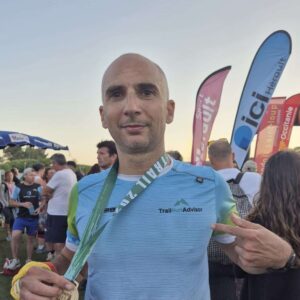
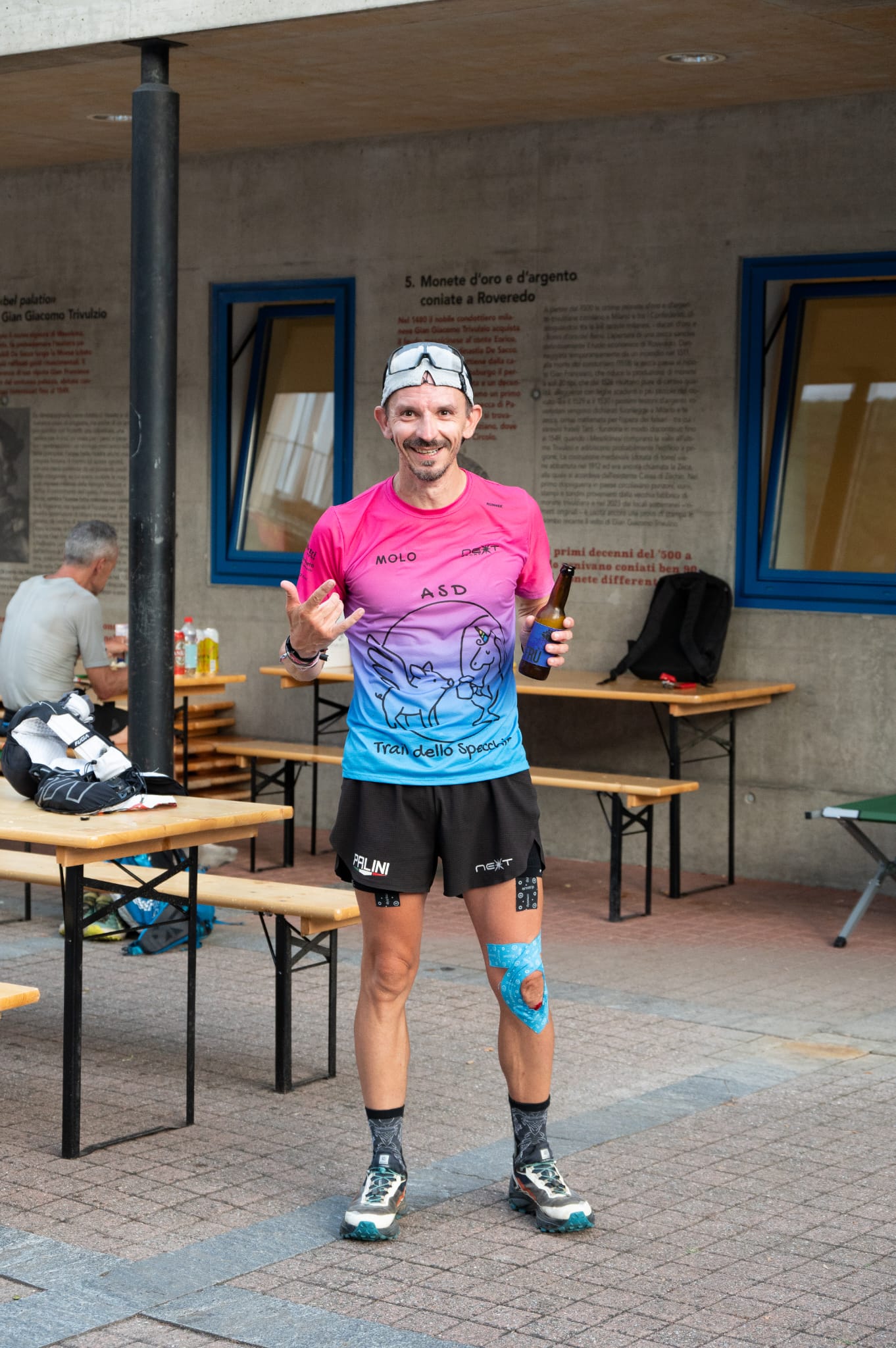
After 150 km, Alessandro spent around 20 km without water under the midday sun. During the first 36 hours, he slept for just seven minutes. His backpack reached 12 kg, and with aid stations around 50 km apart, managing hydration and food became a challenge in itself.
Alessandro’s previous longest race was the Tor130. The jump to 500 km was therefore not a gradual progression. It was, in his own words, a “leap into the void.”
We spoke to Alessandro after completing the Ticino 500 to find out what it is really like to run 500 km and 40,000 metres of elevation — and how you manage hydration, nutrition, sleep, fatigue and the mental challenge when the finish line is still hundreds of kilometres away.
Here is his story.
Q. What made you choose this particular challenge, and what attracted you to the idea of running 500 km through Ticino?
After giving up on the TOR330 in 2025 because of an injury, I wasn’t able to register for the 2026 edition using the pass from the Adamello Ultra Trail.
So I decided to listen to that voice in my head that had been telling me to try the Ticino 500 ever since I received the email announcing the first edition of the race.
The combination of areas I had never visited and a distance I had never run seemed like the right mix of recklessness and the desire to discover my limits.
Especially considering that the longest race I had completed up to that point was the Tor130.
Q. What does 500 km and 40,000m of elevation actually feel like? Before the start, could you really imagine what 500 km and 40,000 metres of elevation would feel like? When did the scale of the challenge really sink in?
Honestly… no.
I don’t know why, but I was quite calm. Even in the days before the race, I never really felt anxious.
That allowed me to arrive at the starting line relaxed and without pressure.
I think I started to understand how hard the challenge was after the first kilometres of endless climbs.
That’s when I started to realise how demanding the course was going to be.
Q. Ticino 500 requires participants to manage their own navigation, food, hydration, sleep and decisions. How challenging was that, especially as fatigue started to build?
The most difficult thing to manage was hydration.
With aid stations around 50 km apart, you have to look for water wherever you can.
I had to ask people living in the villages we passed through for help.
During the final part of the race, I even had to take risks by drinking from fountains without knowing whether the water was safe.
Food was another challenge.
We relied on what we carried in our backpacks — which at one point weighed as much as 12 kg — as well as the mountain huts, which in Switzerland are called capanne.
We hoped to arrive at a hut in time for dinner.
If we didn’t make it in time, there was no dinner.
It was simply time to go to bed for a couple of hours at most and continue.
Q. What was the hardest moment of the race? Was there a moment when you seriously questioned whether you could finish? What happened, and how did you get through it?
The worst moment of the race came after around 150 km.
I found myself without water for approximately 20 km under the midday sun.
I needed to sit down and rest, but I was afraid that if I stopped, I wouldn’t be able to start again.
So I never actually took a break.
Fortunately, a fountain appeared along the course.
It literally saved me.
Q. With hundreds of kilometres to cover, sleep becomes a huge part of the challenge. How did you manage it?
During the first 36 hours of the race, I practically didn’t sleep at all.
I only slept for seven minutes on a camp bed at the base camp around kilometre 100.
During the first part of the race, when we reached a mountain hut, I would sleep for a maximum of two hours in the dormitories.
After halfway, I tried to sleep at the base camps, again for a maximum of two hours, so I wouldn’t lose too much time.
If I became sleepy while I was on the course, I would take five-minute power naps.
During the first hours of walking, which were always in darkness, I also used caffeinated gels. Once the caffeine kicked in, it helped me stop feeling so tired.
Q. How did you deal with the mental side of the race when you were exhausted but still had an enormous distance ahead of you?
I think I still need to understand exactly what happened during those 500 km.
I haven’t fully processed everything yet, so it will take some time before I know what I really learned from the experience.
For me, this race was a leap into the void.
Going from 130 km to 500 km without any intermediate steps was madness.
But it also made me realise how determined I can be when I set myself a goal.
A race like this tests you from every point of view.
It’s not only about what happens physically and mentally on the trails.
Even when you’re at the base camp, you have to organise everything as efficiently as possible and make the best use of your time.
You have to decide whether the time you save should be used to eat or to sleep.
Q. Was there a particular place, section or encounter that will stay with you from the experience?
The whole experience is still very fresh for me, so I’m still trying to process it.
But the experience of managing the lack of water, the sleep deprivation and the constant need to organise everything while continuing to move are things I won’t forget.
The moment when that fountain appeared after being without water for around 20 km is certainly one of the moments that stands out.
Q. After 500 km, what did you learn about yourself - or about ultra running - that you didn't know before?
I still need time to understand what happened during those 500 km.
But I definitely learned something about my determination.
Going from 130 km to 500 km without any intermediate steps was a huge leap.
It showed me how determined I can be when I really fix a goal in my mind.
And I realised that a race like this tests you in every possible way.
You have to manage the physical side, the mental side, your equipment, your food, your hydration and your time.
Even at the base camps, you are still racing.
You have to organise everything in the shortest possible time so that the time you save can be used for eating or sleeping.
Q. Now that you've had some time to process the experience, would you take on Ticino 500 again? And what would you do differently?
Until now, I’ve never run the same race twice.
But Ticino 500 could be a challenge I would like to take on again.
Maybe not immediately.
I would like to understand whether I’ve learned how to manage everything better.
I would also consider having assistance along the course.
Having someone who could help by bringing water and having food ready would allow me to carry a lighter backpack.
That could potentially allow me to move faster and improve my time.
500 km changes the meaning of ultra running
Alessandro’s experience of Ticino 500 shows just how different extreme ultra-distance running becomes once the distances reach this level.
At 500 km, the challenge isn’t simply about running.
It’s about managing yourself for hundreds of kilometres.
Water becomes a logistical problem.
Food becomes part of your race strategy.
Sleep has to be carefully managed.
A backpack can weigh 12 kg.
And every decision made while exhausted can have consequences many kilometres later.
For Alessandro, the jump from a 130 km race to 500 km was a leap into the unknown.
And even after reaching the finish, he says he is still processing what happened.
Perhaps that’s what makes challenges like Ticino 500 so fascinating.
You don’t just find out how far you can run.
You find out how you function when almost everything becomes difficult.
Would you take on a 500 km ultra?
Have you ever run an ultra where managing sleep, food or hydration became as important as running itself?
Share your experience →About Alessandro's Ticino 500 experience
This interview was conducted by TrailRunAdvisor following Alessandro’s completion of Ticino 500. His responses have been translated and lightly edited for clarity