
Angkor Trail: Discover Cambodia Through Trail Running, History and Culture
In an exclusive interview with TrailRunAdvisor, the organisers explain how this unique event combines trail running, the ancient Khmer civilisation and the discovery of Cambodian culture.
In Cambodia, the Angkor Trail offers something quite different from a traditional trail race. Set among the extraordinary landscapes of the Angkor archaeological site, this event combines trail running, history, culture and encounters with local communities.
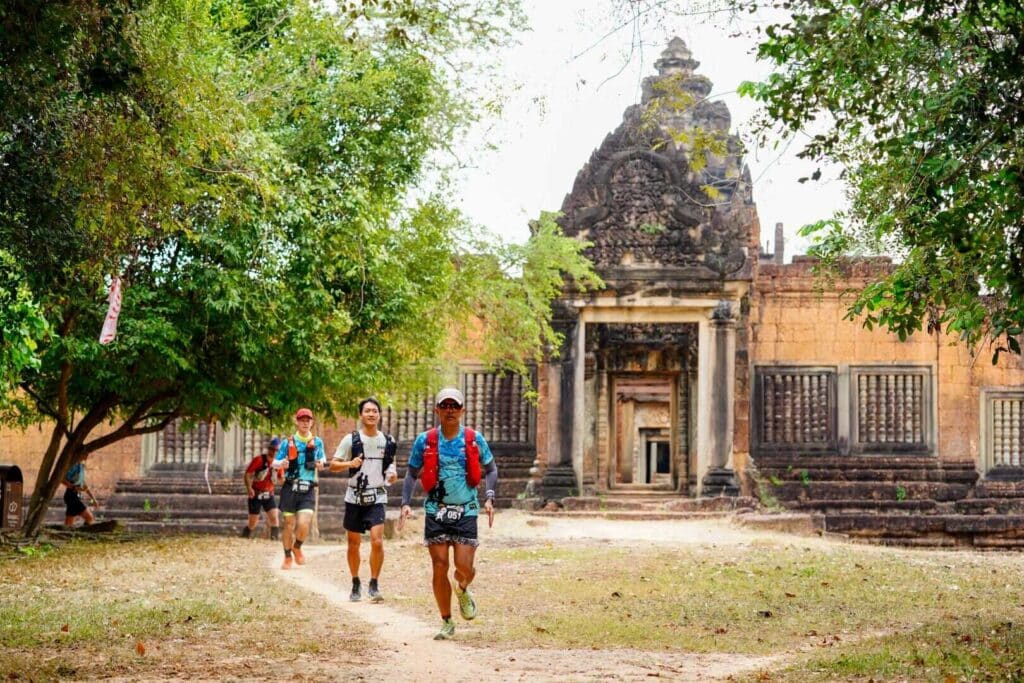
Imagine running along sandy paths, through tropical forests and rice fields, passing traditional villages and centuries-old temples. Here, the challenge is not simply about distance, elevation or finishing time. It is also about discovering a country and experiencing its heritage in a different way.
To understand what makes this event so special, we spoke with Jean-Claude Le Cornec, founder of SDPO and organiser of the Angkor Trail. A passionate runner and traveller, Jean-Claude has spent decades developing sporting adventures that bring together running and cultural discovery.
In this exclusive interview with TrailRunAdvisor, he explains the philosophy behind the race, the particular challenges of running in Cambodia, the importance of local communities and why runners should take the opportunity to explore the country beyond the finish line.
1. Angkor: A Place Steeped in Mystery
Angkor fascinates visitors with its monumental temples and almost mystical atmosphere. What does this place represent, and what difference does it make to discover it while running rather than simply visiting as a tourist?
Jean-Claude:
Angkor inspires a sense of humility. Standing in front of these temples, we realise what a civilisation was able to build, transmit and leave behind.
But what particularly touches me is that this history continues to live today. Angkor remains a place of prayer, pilgrimage and everyday life. Its spiritual dimension is not simply part of its atmosphere; it belongs to the present-day lives of Cambodians and, now, to the participants of the Angkor Trail.
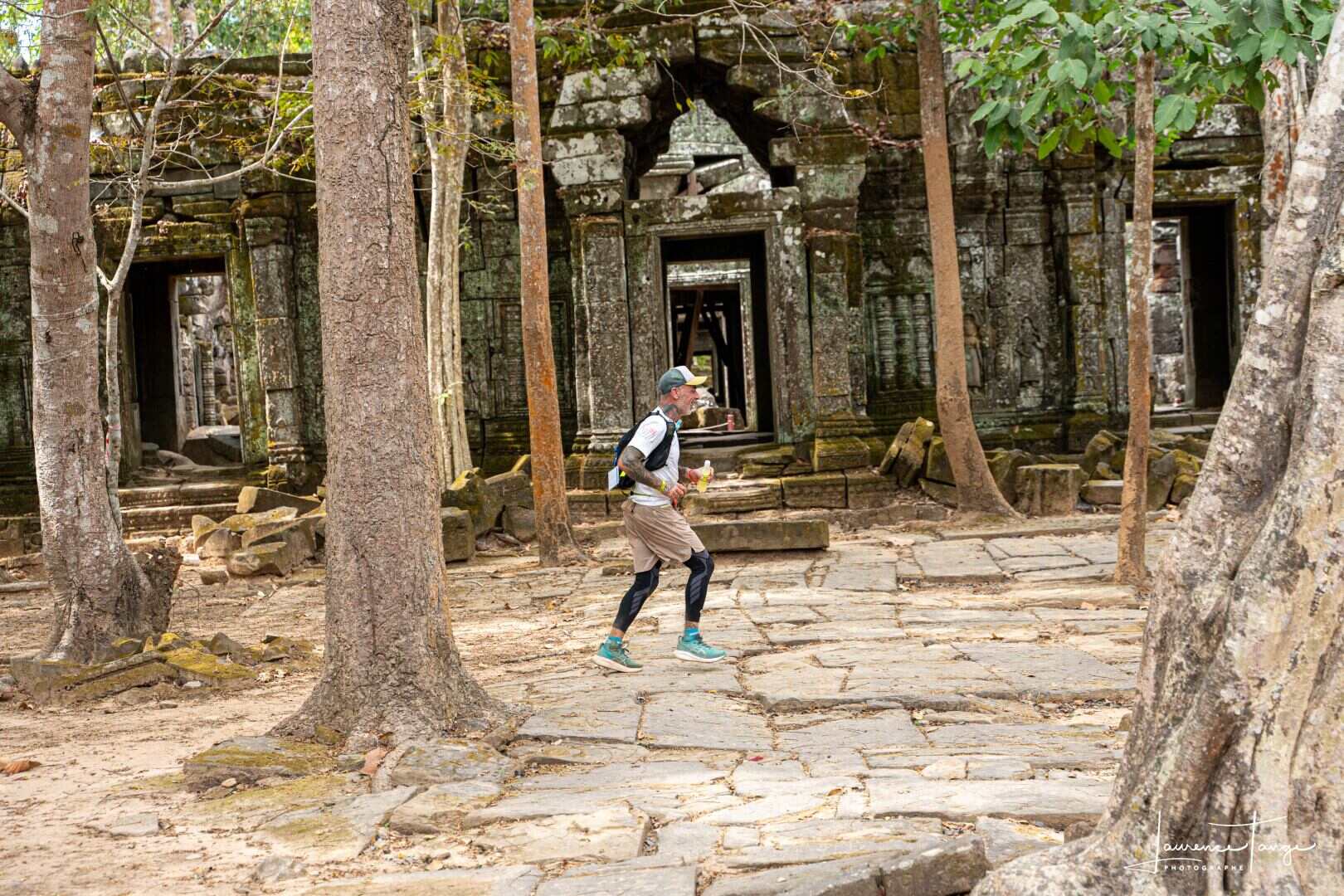
Discovering Angkor while running allows you to experience the connection between the temples, the forest, the paths and the villages. You hear the sounds, feel the heat and experience the distances. Between two monuments, there is an entire territory waiting to be discovered through the strength of your legs.
Running brings a physical immersion into this environment, while visiting the temples afterwards allows you to stop, listen to a guide and understand their history. The two experiences complement each other.
For me, the most rewarding trip is precisely one that combines these two perspectives.
2. Discovering the Legacy of the Khmer Civilisation
What does the heritage of the Khmer Empire represent for Cambodians today, and how does the Angkor Trail help international runners discover this extraordinary civilisation?
Jean-Claude:
Angkor represents a major landmark of Cambodian identity and an immense source of pride.
The Khmer heritage can be seen in the architecture and sculptures, but also in the organisation of the surrounding territory. The reservoirs, water tanks and canals bear witness to a civilisation whose achievements go far beyond its temples.
Through the Angkor Trail, we want to encourage participants to understand this heritage. The different courses allow them to appreciate the scale of this historical landscape, connecting places and scenery that they might not necessarily discover during a conventional visit.
Depending on the distance they choose, the experience and the locations they encounter will be different.
This is an extension of the approach I started developing with Les Foulées de la Soie in 1996: bringing sport and culture together.
A sporting event can become a gateway to discovering a country's history, provided you keep your eyes open and take the time to explore beyond the race itself.
3. Beyond the Temples: Discovering Cambodia's Local Communities
What role do local communities play in the Angkor Trail, and what would you like European runners to understand about everyday life, traditions and Cambodian culture?
Jean-Claude:
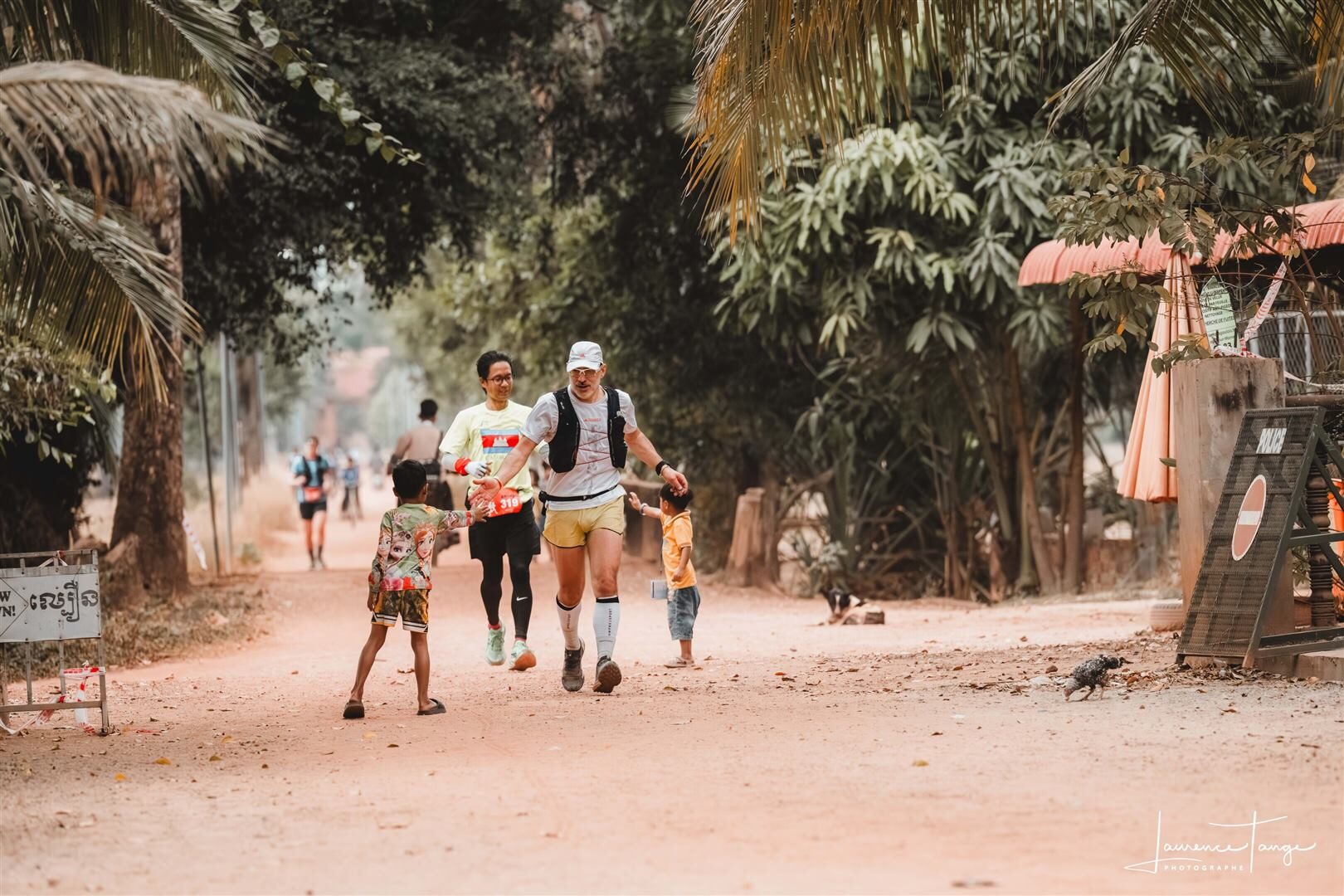
Local communities play an essential role because our courses pass through places that are inhabited, cultivated and used every day.
Villages and rice fields are part of the reality of Angkor. We are guests in this territory, and that means respecting its inhabitants, their activities and their places of worship.
The event is also built through collaboration with our Cambodian contacts, local teams, guides, partners and authorities. Cambodian participants also have an important place in the event. Bringing together runners from different countries is something that matters greatly to us.
I would like participants from different continents to take the time to observe and exchange, rather than looking at Cambodia only through its monuments or the difficult periods of its history.
There is a contemporary life here, with skills, a younger generation and many projects. Trying the local cuisine, discovering a market or listening to a guide talk about their country can often provide a much better understanding of what you are experiencing.
Our commitment to local organisations, particularly those working in education and supporting children, is also part of our desire to build lasting relationships with the communities around us.
4. Trail Running in Cambodia: A Different Kind of Challenge
How do the terrain, landscapes and race conditions – including heat, humidity, sandy paths and dirt tracks – differ from European trail races? How should participants prepare for these conditions?
Jean-Claude:
A runner accustomed to European mountain trails needs to adjust some of their usual reference points.
In Angkor, the difficulty is not measured solely by elevation gain. Sandy paths, earth and laterite tracks, forest sections and more exposed stretches place different demands on the legs.
Sand, in particular, can make a section that appears relatively easy much more demanding than expected.
Heat and humidity also require runners to adapt their effort. A relatively runnable course can become difficult if participants start at their usual pace without taking the weather conditions into account.
I therefore recommend arriving a few days before the race, starting gently and choosing a distance that matches your level of preparation.
You should have tested your shoes, clothing, nutrition and hydration strategy during training. Comfortable footwear, lightweight clothing and protection against the sun are particularly important.
Above all, you need to be prepared to adjust your objectives on race day.
The experience should be prepared seriously, then enjoyed with good judgement and the pleasure of discovering something new.
5. Beyond the Race: Discovering Cambodia
How would you advise a European runner to organise their trip to discover more of Cambodia, its history, culture and landscapes beyond the temples of Angkor?
Jean-Claude:
My first recommendation would be to allow enough time around the event.
Arriving, running the race and immediately leaving again does not leave much opportunity to connect with the country. Spending a few days beforehand allows you to settle in, while staying for a few days afterwards gives you the freedom to explore without constantly thinking about the race schedule.
As someone who has been developing the concept of Sport and Culture since 1996, with Les Foulées de la Soie in Siem Reap, I would recommend complementing visits to the temples with time spent discovering the city, local cuisine, traditional crafts and the surrounding countryside.
A local guide can make a real difference. They explain not only the monuments but also local customs and the transformations taking place in the country.
Depending on your interests and the time available, you can also consider visiting Tonlé Sap, Phnom Penh to learn more about Cambodian history, or extending your journey towards the coast and Koh Rong.
My main advice is not to try to see everything. A few discoveries experienced fully are much more rewarding than spending the entire trip travelling between destinations.
And always leave some time for unexpected encounters. They are also part of what makes a journey special.
6. Why Should Trail Runners Experience the Angkor Trail?
Beyond the sporting challenge, what would you like participants to take home with them? Why should a European trail runner make the journey to Cambodia to experience this event?
Jean-Claude:
I would like participants to leave with the satisfaction of completing their race, but also with memories of faces, conversations and the desire to return.
I hope they will be able to tell stories about a moment spent in a village, something they discovered with their guide or an encounter with a Cambodian runner.
The Angkor Trail brings together a sporting experience, exceptional heritage and the discovery of a country.
The different distances, together with the walking events, also allow people to share the journey even when they do not have the same level of fitness or sporting ambitions.
Since the creation of SDPO, my conviction has remained the same: sport makes encounters possible.
People may speak different languages and have very different backgrounds, but they can come together through a shared effort and a simple word of encouragement.
Why make the journey? To experience this combination of movement, history and human connection.
If the race bib encourages people to discover Cambodia and get to know those who live here, then we will have achieved an essential part of our objective.
7. A Complete Experience: Combining Trail Running and Cultural Discovery
You also offer complete travel packages lasting around a week, allowing participants to combine the race with discovering Angkor and Cambodia. What do these stays include, who are they designed for, and how do they help runners make the most of their trip?
Jean-Claude:
These stays extend our vision of Sport and Culture.
We want to help participants prepare for their race while also discovering the country, with an organisation that makes travelling easier.
In particular, we offer a seven-day, six-night package called "Discoveries Around the Temples of Angkor", with several accommodation categories available.
The idea is to organise the stay around sightseeing and the race day. Depending on the package selected, accommodation, transfers, guided visits and certain meals are included. The exact services and registration details are specified in each offer.
These packages are designed for runners, walkers and accompanying guests, whether they are travelling alone, as a couple, with friends or with their running club.
They are particularly attractive for people discovering Cambodia for the first time, as they benefit from an organised programme, local contacts and time to share the experience.
We also offer shorter stays and opportunities to extend the trip, particularly towards Koh Rong.
The idea is simple: allow participants to concentrate on their sporting adventure while fully enjoying everything around them.
The race then becomes a highlight within a much wider journey.
Angkor Trail 2027: An Invitation to Discover Cambodia
The Angkor Trail perfectly illustrates how trail running can become a way of discovering a country, its history and its people.
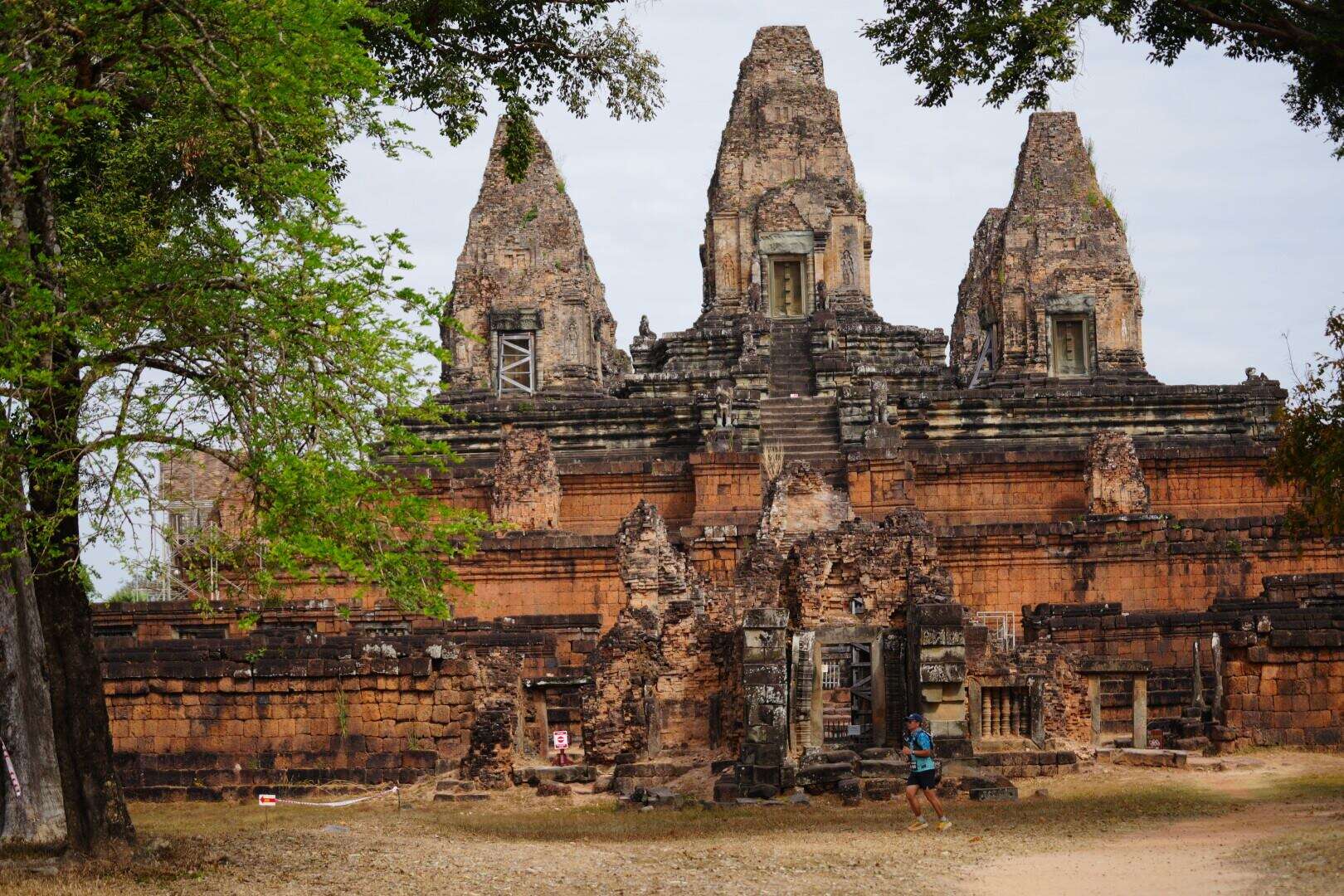
For runners looking for a different kind of international adventure, Cambodia offers an extraordinary setting. Ancient temples, tropical forests, sandy paths, rice fields and traditional villages create a racing environment unlike the mountain trails most European runners are accustomed to.
The 2027 edition will take place on 23 January 2027, with six main distances:
- 10 km – Elephant Trail
- 21 km – Naga Trail
- 32 km – Jungle Trail
- 42 km – Marathon Trail
- 64 km – Bayon Trail
- 100 km – Angkor Ultra Trail
Walking and hiking options are also available, as well as a 4 km children's race for participants aged 12 to 15.
Whether you are an experienced ultra-runner, a marathon enthusiast or simply looking for an original way to discover Cambodia, there is an opportunity to experience Angkor from a different perspective.
And perhaps that is the most important message from this conversation with the organisers: travelling for a race should also mean taking the time to discover the country that welcomes you.
Would you travel to Cambodia to run through the temples of Angkor?
About the Angkor Trail
The Angkor Trail is an international trail running event organised by SDPO, taking place in the Angkor archaeological site near Siem Reap, Cambodia.
The 2027 edition takes place on 23 January 2027 and features six trail distances, from 10 km to 100 km, alongside walking and hiking options.
The event combines sporting challenges with the discovery of Khmer heritage and Cambodian culture.
Find out more and register: